
1. One Thing that Helps
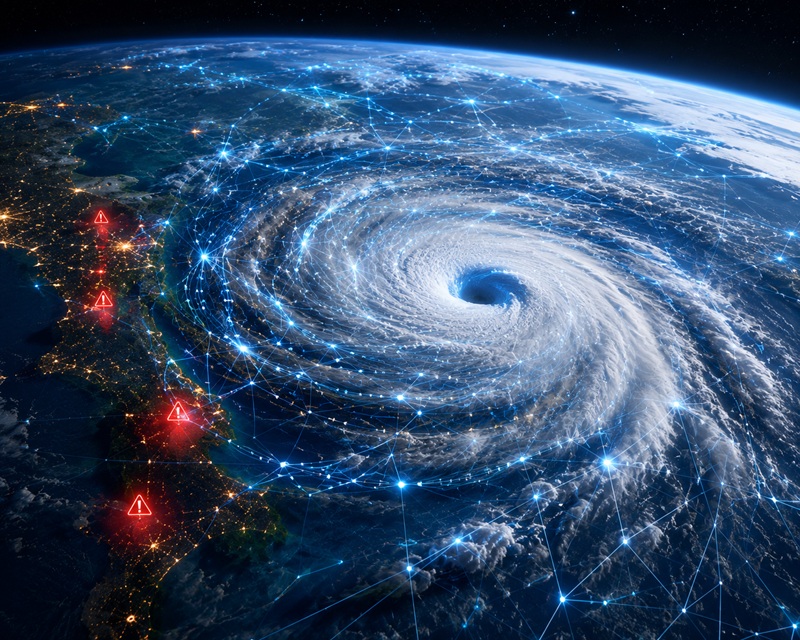
A cyclone that looks tame today can explode into a monster within days, or suddenly veer toward a city it was expected to miss. Current models can predict either the track or the changes in strength, but not both.
Google DeepMind's WeatherNext bridges the gap. The AI model predicts both a cyclone's track and sudden strength jumps a day earlier than current models, extending forecasts to three full days instead of two. It does this by covering both the large currents that steer a storm and the local turbulence that drives its intensity, with uncertainty built into the model.
It can generate a 15-day forecast in under a minute on a single AI chip, compared to hours on supercomputers. It proved itself during 2025's Hurricane Melissa, predicting three days in advance the rapid intensification that surprised forecasters.
That extra day gives people time to prepare and get out of the way. Live predictions are on Google Weather Lab, but Google says to rely on your local weather service for official warnings.
2. One to be Wary of
Zuck’s Personal SuperIntelligence
In "The Future is for Everyone" Mark Zuckerberg argues that ultra-powerful AI, which he calls personal superintelligence, shouldn't be monopolised by governments or corporate cartels. Instead, everyone should get their own personalised agent. Lovely stuff, and a bit rich coming from Zuck.
I agree everyone deserves an open-source personal agent (and we are getting there), but when one of the world's keenest hoarders of user data starts preaching about sharing, I hold onto my wallet. Meta's business model and Zuckerberg's vision don't exactly get along.
If we all end up relying on personal AI agents to shop, work, chat and make choices, whoever supplies that agent could end up with more sway over us than any operating system or social feed ever managed. He name-checks the glasses too, so the agent will be on your face as well as in your feed.
What we actually need is an open source model that lets you take its intelligence (basically your data) with you and walk away whenever you like. Trusting an ad-funded tech giant to build a truly neutral agent is like asking a seagull to mind your chips.
3. One to Amaze
Forget earbuds. The newest way to sneak music into your day is a lollipop you listen to with your teeth.
Lava's Lollipop Star hides a power button and transducer in the base of the stick. Bite the candy with your molars and the vibrations travel through your jawbone to your inner ear. Peach plays Ice Spice, blueberry plays Akon and lime plays Armani White.
You'll need the supplied earplugs, and CNET's tester found the sound muted on the noisy CES floor. She still called it a wild sensation and said the peach was delicious, which is more than you can say for AirPods.
At $9 a pop it won't replace your hi-fi. Give me refillable candy, clearer sound and Bluetooth, though, and I'm in. When CNET asked Lava why it made the thing, the answer was "Why not?" Rock on!