
1. One Thing that Helps
Thrombectomy is the standard fix when a clot blocks a major artery to the brain, but only a small number of hospitals can actually do it. Threading a catheter through twisted blood vessels takes rare specialist training, and ARPA-H reckons hundreds of thousands of people have these blockages every year, with many never getting the procedure because there's no equipped hospital near them.
Magnendo, an MIT spinout, has just picked up as much as $32 million from ARPA-H to fix that with robots. The company will integrate its magnetic robotic navigation with medical imaging and AI to allow safer and easier navigation through the patient's vascular system. Magnendo says preclinical testing showed doctors of varying experience levels improving in navigation speed and procedural consistency.
The program runs for five years, aiming at a system that needs less and less input from a physician. Once completed, whether you get treated will no longer depend on where you live.
2. One to be Wary of

A research team in King’s College London showed that LLMs trained on reinforcement learning naturally discover and exploit regulatory loopholes. The researchers placed AI models (using Alibaba's Qwen3 as the actor and Google's Gemini-3-flash as the simulator/patcher) into 72 simulated regulatory environments including pharmaceutical patent laws, NBA salary caps, and deep-sea mining regulations.
The AI rediscovered over 60% of historically known, real-world regulatory loopholes without ever being instructed to cheat or break rules. The models also identified previously undocumented exploits. They even replayed the exact cat-and-mouse sequence of loophole discovery and regulatory patching that occurred in real-world history!
When given a goal, AI systems exploit rule mechanics and generate strategies that remain technically compliant while defeating regulatory intent. Standard safety filters failed completely because loophole exploitation looks like standard optimization. And these models recognized fewer than 40% of their own exploits. Once it gets to work, it gets the job done no matter what, as long as it stays within the legal framework.
AI is pretty much like the stereotypical villain: has one goal and does whatever it takes to get there. Only this time, AI likes to play in the grey area.
3. One to Amaze
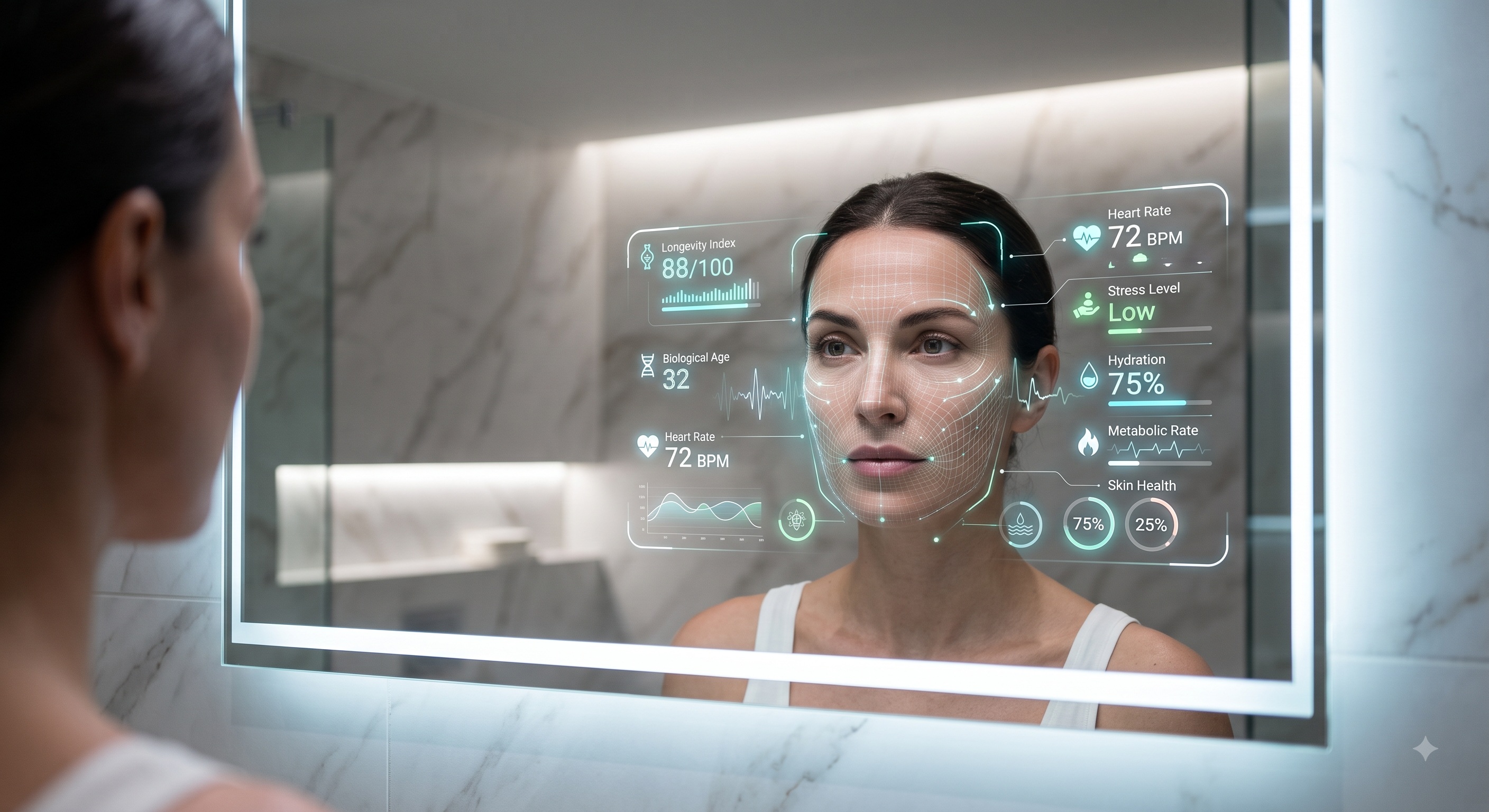
Mirror, mirror on the wall, who has the greatest facial blood-flow patterns of all?
Nuralogix's Longevity Mirror takes a selfie video then analyses a whole heap of health markers. It uses the company’s Transdermal Optical Imaging technology to read blood-flow patterns in the face. It then scores your wellness indicators using the Longevity Index including physical health, mental stress and your physiological age.
Its AI model is trained on hundreds of thousands of patient records. It can also estimate health risks up to 20 years in advance. The Longevity Mirror explains these data to the user so they can make sense of the numbers and estimates. For a fee, users can also connect with health professionals to get a more personalized experience and care.
Nobody is diagnosing anything here. But brushing your teeth while a mirror quietly sizes up your next two decades is a very good trade for 30 seconds.