
1. One Thing that Helps
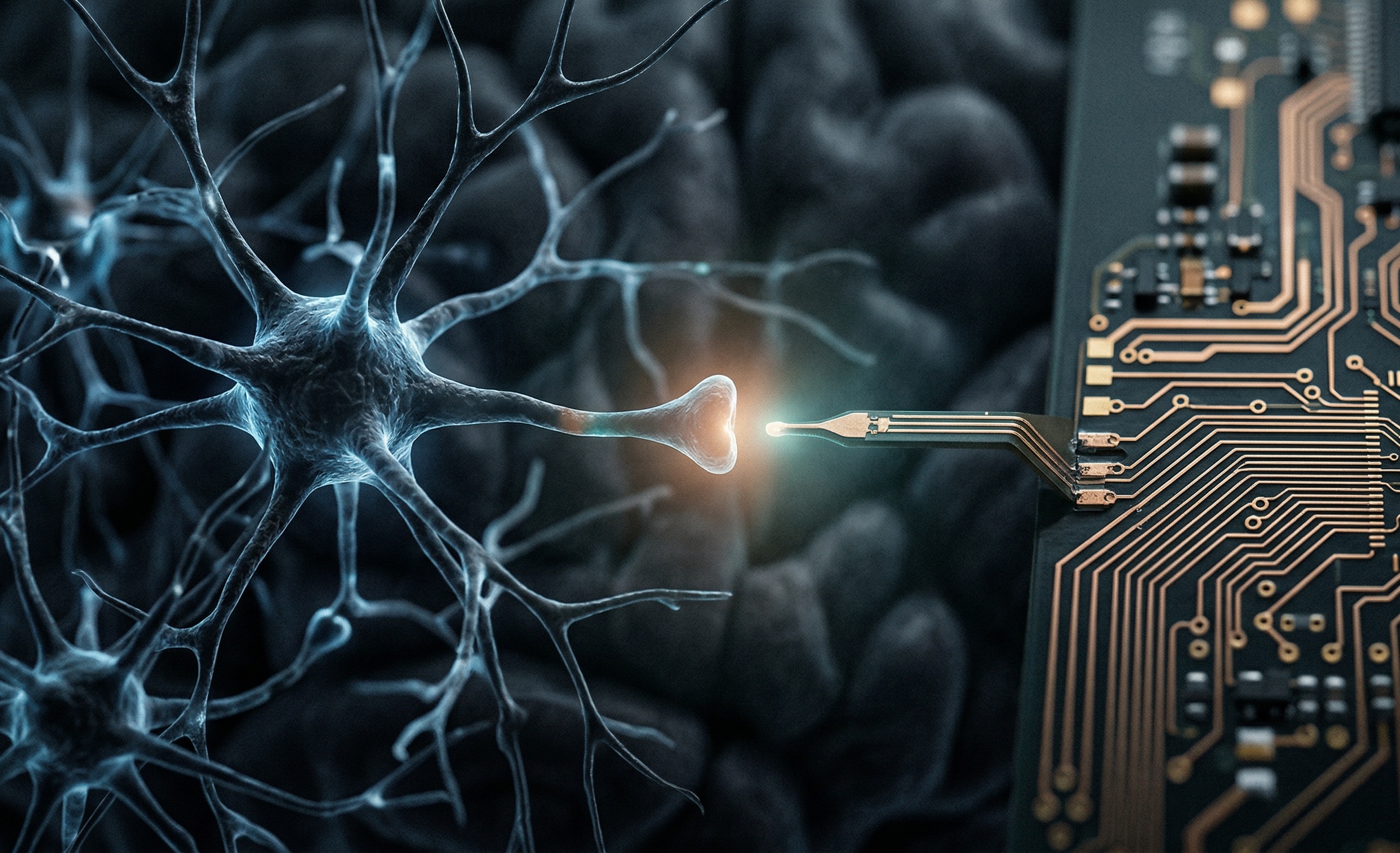
Prosthetics and brain implants have a fundamental wiring problem. The electronics we build speak a different electrical language to the tissue they connect with, requiring bulky amplification hardware to translate between the two. That mismatch has kept truly seamless brain-machine interfaces out of reach.
The problem comes down to voltage. Our nerve cells fire at between 70 and 130 millivolts. Most artificial neurons have needed around 500 millivolts, roughly four to seven times the voltage and a hundred times the power. Plug them directly into living tissue and they overwhelm it rather than talk to it.
Jun Yao and his team at UMass Amherst solved this using protein nanowires from Geobacter sulfurreducens, a bacterium that naturally shuttles electrons outside its own cells. Those nanowires tuned their artificial neuron to operate within the brain's native voltage range, with no amplifier required. The device also responds to chemical signals like dopamine and sodium, meaning it can read the body's context, not just its electrical pulses. That puts prosthetics that respond to intended movement, implants that anticipate seizures, and interfaces that restore speech within reach of the same underlying technology.
2. One to be Wary of
Backup Body for the Ultra-Rich
A California startup called R3 Bio recently went public with plans to grow brainless monkey "organ sacks" as an alternative to animal testing. Its founder, John Schloendorn, has also privately pitched a more extreme version: growing genetically engineered human clones without functioning brains, kept alive as a personal supply of transplantable organs or potentially as a replacement body entirely.
R3 denies the human clone claims, and no evidence exists that they have produced one. The technical obstacles are formidable. Human cloning remains illegal in most countries, and a full body transplant would almost certainly be fatal with current surgical techniques.
But the ethical questions don't wait for the technology to catch up. Where exactly does consciousness begin? Children born with hydranencephaly, a condition where most of the brain is absent, still retain a functioning brain stem and are protected from organ harvesting under current medical standards. So engineering a clone to replicate that condition doesn't resolve the "problem". A neuroscientist who surveyed caretakers of over a hundred such children concluded that harvesting organs from bodies modeled on that condition would still be unethical. And as Harvard's George Church put it when asked about the concept: "not very useful, in addition to being repulsive".
3. One to Amaze

Most of the bubbles in your beer come from ammonia plants and fertilizer factories. It works fine, until it doesn't. A nationwide CO2 shortage in 2022 hammered breweries across the US, exposing just how fragile that supply chain actually is.
A California startup called Aircapture has a fix that is, genuinely, pulling carbon out of thin air. They partnered with Almanac Beer Co. in Alameda to install a Direct Air Capture unit inside the brewery itself. It grabs CO2 from the surrounding atmosphere, refines it to 99.999% purity, and feeds it straight into the brewing process. No trucks, no fertilizer plants, no supply chain to panic about.
The beer, called Flow - Clean Air Edition, is already on shelves at Whole Foods and about 800 other California retailers. Drinking responsibly has never been this literal. One pint at a time, you are now a carbon capture facility. Homer Simpson would be proud.