
1. One Thing that Helps
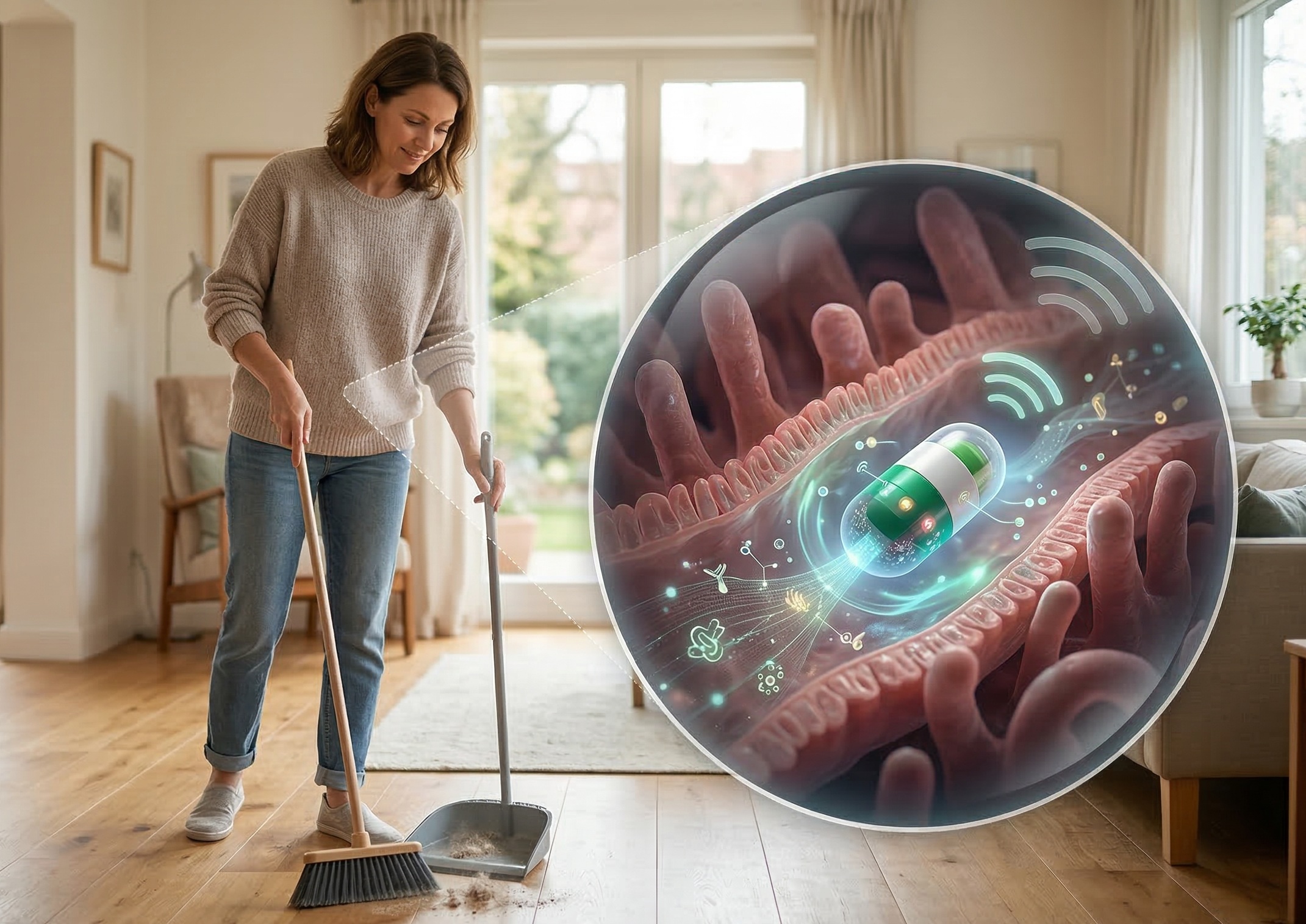
Gut diagnostics today are often invasive, uncomfortable, and inconclusive. Millions face repeat procedures just to get answers, and treatments can have broad side effects.
Smart pills are changing that. These ingestible capsules act as mini-labs, sensing tissue health, tracking gut chemistry, and even taking biopsies as they pass through the digestive system. Some deliver medication right where it’s needed, reducing side effects and improving results. Others use microneedles or spring-loaded tools to collect samples for more precise diagnosis.
Building these pills is a challenge. They must survive harsh conditions, run on tiny batteries, and transmit reliable data. Researchers are testing new power sources, including capsules powered by gut fluids or probiotic bacteria. The goal is a single capsule that can diagnose, treat, and report back, all from inside the body. If successful, a simple pill could replace many hospital visits and make care faster, safer, and far less stressful.
2. One To Be Wary Of
When AI starts rating employees on friendliness, the line between coaching and surveillance gets thin. Burger King (Hungry Jack’s in Australia) has introduced "Patty", an AI manager built on OpenAI tech, that listens in on every employee-customer conversation through headsets. Patty tracks keywords like "please" and "thank you", then generates a "Friendliness Score" for each worker.
But there are real risks. Constant algorithmic monitoring can turn genuine human interaction into scripted performance, leading to stress, and eroding trust. AI also struggles with diverse accents, so non-native speakers could be unfairly penalised.
McDonald’s recently tried using AI to fully automate drive-thru orders, but the system misheard customers, fumbled accents, and added random items. That experiment was scrapped. Now, McDonald’s is using AI to monitor kitchen equipment like fryers and ice cream machines rather than surveilling staff. The lesson: AI should help employees be more human, not make them feel less so.
3. One To Amaze

Want a flying car experience without the price tag? Uber is about to make it possible. Later this year, starting in Dubai, you’ll be able to book all-electric air taxis right from the Uber app, turning long commutes into quick aerial hops. Trips that used to take 50 minutes on the road could be just 10 minutes in the air.
These flights use the Joby eVTOL aircraft. Zero-emission, whisper-quiet, and capable of speeds up to 200 mph. But you won’t be flying door-to-door. Air taxis take off and land at special “vertiports” set up on rooftops, parking garages, or major transport hubs. Your journey starts with a regular Uber to the nearest vertiport, then you fly to another vertiport across town, and finish with ground transport to your final stop.
Booking is as easy as ordering a regular Uber, with the app handling the entire trip. The sky is becoming a high-speed highway, making cities more connected and your time your own.
What will you do with those extra minutes?